

Summer is a special time. It’s slower mornings, trips to the pool, more family time, and a well-deserved break from the school routine.
As much as we love summer and the slower pace, it can also have us wondering, “How do I ensure that my child doesn’t lose the reading progress they worked so hard to build this year?“

When children lose some of the reading skills they built throughout the school year, teachers refer to it as the “summer slide.”
While the “summer slide” is common, it is not inevitable. With just a few small shifts and a few minutes a day, you can help your child maintain and even grow their reading skills this summer.
Why Reading Skills Can Slip Over the Summer
Reading is a skill that requires a lot of practice. In fact, according to literacy expert Wiley Blevins, after a new skill is introduced, it should be purposefully reviewed and practiced for 4-6 weeks.
During the school year, children are reading, writing, and working with words every day. Over the summer, that consistent exposure often disappears.
For children who are still developing foundational skills like phonics, decoding, and fluency, even a short break can make reading feel harder when they return to school.
But here’s the encouraging part: Small, consistent moments of practice can make a big difference.
4 Simple Ways to Keep Reading Skills Strong This Summer
You don’t need an hour-long routine or a stack of workbooks. A few intentional minutes each day can go a long way. Here are some ways you can help keep your child’s reading skills strong this summer:
1. Keep Reading Time Short and Consistent
You don’t need a long lesson. In fact, 10–15 focused minutes a day is often enough. A short daily routine keeps skills fresh and prevents that “starting over” feeling in the fall.
So what can you actually do in those 10–15 minutes?
That time might look like:
- Practicing letter sounds
- Blending sounds to read simple words
- Reading a short decodable book
- Playing a quick phonics game
The key is choosing the right activity for your child’s current skill level.
If you’re not sure what your child should be working on, you don’t have to guess.
Instead, sign up for a FREE trial of Sure Start Reading. When you do, you’ll begin by taking a quick, parent-friendly quiz that identifies which reading skills your child has already mastered and which ones may need more support.

From there, you’ll get:
- A clear, personalized starting point based on your child’s current skill level
- Lesson plans and activities your child can begin right away
- A simple, step-by-step routine that fits into just 15 minutes a day
- A sense of relief that you finally know what to focus on and what you can skip
You won’t be guessing what to do next. You’ll have a plan tailored specifically to your child.
Start your free trial of Sure Start Reading and begin today.
2. Make Reading Practice Feel Like Play
Not all reading practice has to look like reading a book.
Games are a powerful way to build skills while keeping things fun and low-pressure. Simple phonics games can reinforce letter sounds, blending, and word reading in a way that feels like play. Check out this blog post for FREE phonics games you can play at home!
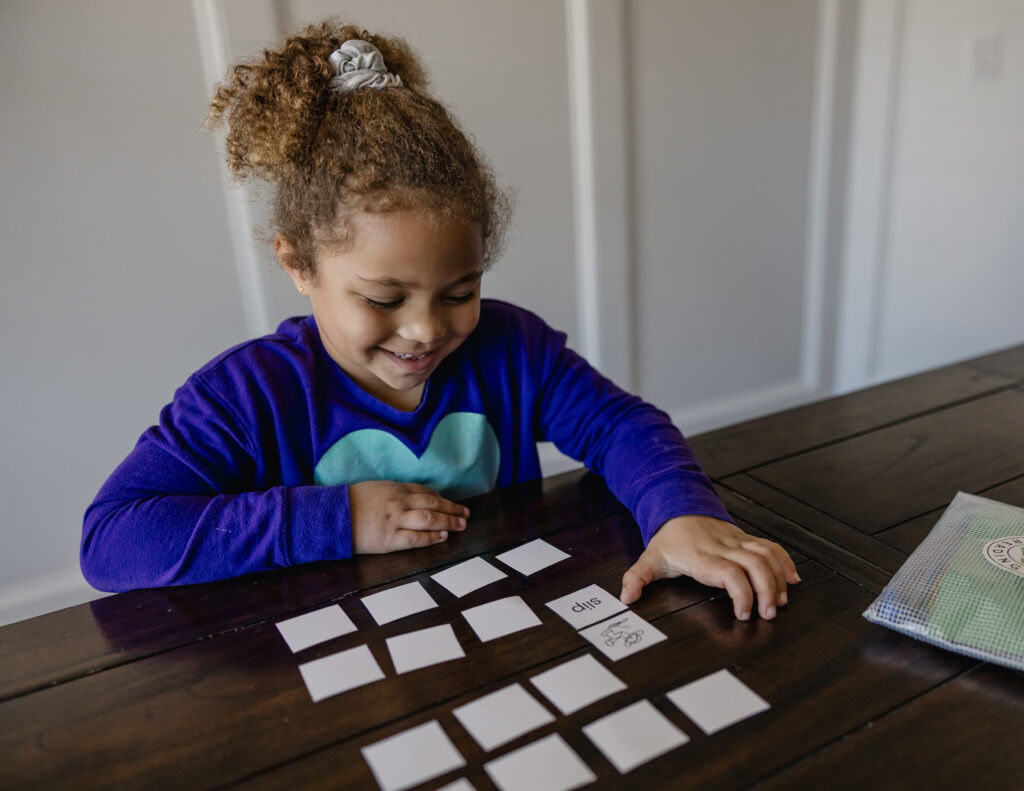
When kids feel successful, they are much more likely to stay engaged and keep practicing.
3. Don’t Jump Ahead to Harder Books
It’s tempting to think your child needs to read “more” or read “harder” books to improve. But if your child is still working on foundational skills, harder books can actually make reading feel more frustrating.
Instead of moving ahead too quickly, focus on helping your child feel successful with the skills they are still developing.
That might look like:
- Practicing simple words instead of longer ones
- Reading decodable books (Grab FREE decodable books here!)
- Slowing down to sound out words instead of rushing through
- Talk about what you have read together

When reading feels manageable, children build confidence. When they feel confident, they are much more likely to keep trying.
4. Keep It Positive and Pressure-Free
During the school year, many children already feel the weight of expectations around reading. Summer is your opportunity to shift that feeling and help your child experience reading in a more relaxed, enjoyable way.
Go to the library and let your child choose books that interest them. They might pick books that feel easy, silly, or easier than what you expect, and that’s okay. When kids feel successful, they are much more likely to stay engaged and keep practicing.

You can also:
- Revisit favorite books they already know and love
- Laugh together over funny stories
- Celebrate small wins, like reading a word correctly or finishing a page
When reading feels good, children are more willing to keep trying. The goal is to help your child feel capable and confident so they are willing to keep at it!
You Don’t Have to Figure This Out Alone
I hope the information I’ve shared here today will help you support your child’s reading journey at home this summer. But remember, you don’t have to figure this out on your own.
With Sure Start Reading, we do the teaching for you. Your child will watch short, engaging lessons and practice new skills step by step, while you support and celebrate their progress along the way.
It’s a simple, guided approach that takes the guesswork out of helping your child become a confident reader.

Summer doesn’t have to mean lost progress. A small amount of consistent, meaningful practice can result in a summer full of confidence, growth, and proud reading moments for your child. You need the right plan, and that’s exactly what we provide at Sure Start Reading.