
Some children seem to pick up reading almost on their own. Others need more. If your child is in that second group, it doesn’t mean something is wrong with them. It means they’re missing one or more of the specific skills that confident readers have.

And here’s the hopeful part: those skills are not something a child either has or doesn’t have. They are teachable. Every confident reader learned them. Which means your child can too.
So what exactly are those skills? And how do you make sure your child gets them? That’s what we’ll discuss today.
Strong Readers Were Taught, Not Born
Reading feels like it should come naturally. After all, children learn to talk just by being surrounded by language every day, so why would reading be any different?
But reading is different.
When a child learns to speak, their brain is doing something it was wired to do from birth. Language develops naturally through listening, conversation, and imitation. Reading does not work that way.

The human brain has no built-in reading circuit. Every child who learns to read is training their brain to do something it was never naturally designed to do. That kind of learning doesn’t happen on its own. It has to be explicitly taught, step by step, skill by skill, in a specific order.
Some children do pick up reading with less direct instruction than others. But explicit, systematic phonics instruction helps every child and is essential for children who struggle. When a child reads with confidence and ease, it’s because they received the right instruction at the right time.
When a child struggles, it almost always means that one or more of those foundational skills hasn’t been fully taught yet, not that they aren’t capable of learning. Struggling means there’s a gap, and gaps can be filled.
4 Things Strong Readers Have in Common
When you look at children who read with confidence, a few key skills show up again and again. These aren’t personality traits or natural gifts. They are teachable, buildable skills, and your child can develop every single one of them.
1. Strong readers can hear the sounds inside words
Before a child can decode words on a page, they need to be able to hear how words are built. This is called phonological awareness, and it’s one of the strongest predictors of reading success we have.
It’s the ability to hear that the word cat is made of three sounds: /k/ /a/ /t/. To recognize that cat and cap start the same way. To pull apart the sounds in dog and blend them back together again.
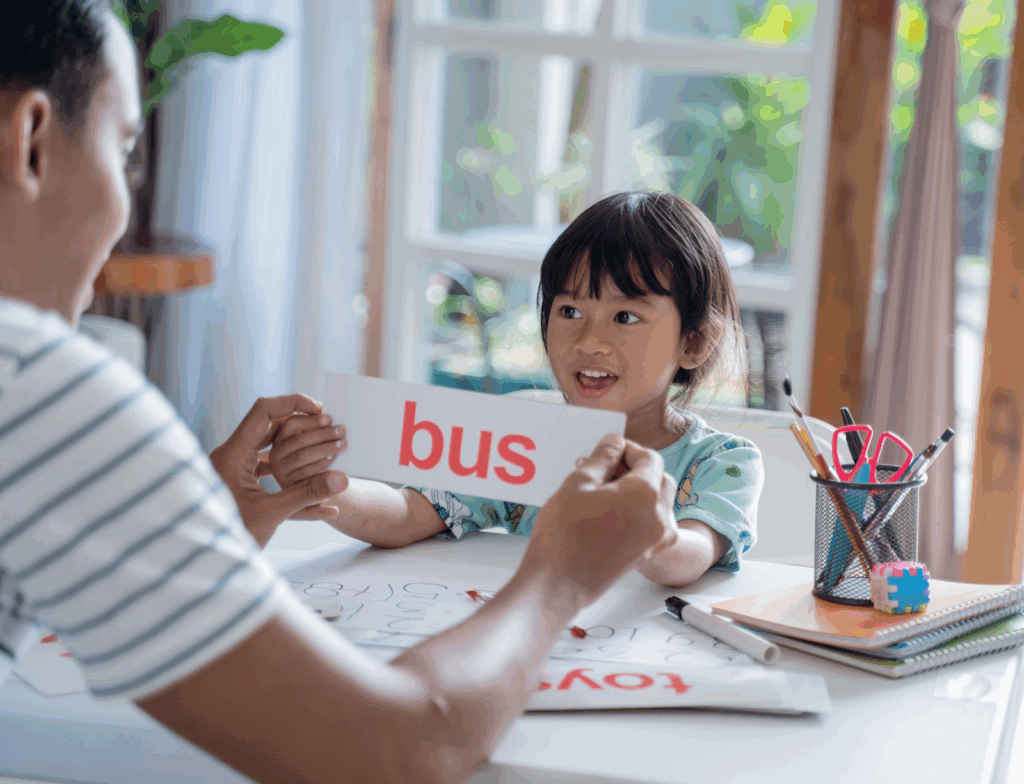
The good news is that phonological awareness can be built at any age with the right practice. It doesn’t take long to see progress once a child begins working on it consistently.
2. Strong readers know how letters and sounds connect
Once a child can hear the sounds in words, the next step is understanding that letters represent those sounds. This is phonics, and it is what powers reading.
Strong readers know that the letter b makes the /b/ sound, that sh together make a different sound than either letter alone, and that when they see an unfamiliar word, they have a way to figure it out.

This knowledge is explicitly and systematically taught in a carefully planned sequence that builds from simple to complex.
Children who haven’t been taught phonics clearly often end up relying on guessing, using pictures, context, or memorization to get through a page. That works for a while, but eventually the words get harder, the pictures go away, and the strategies that once carried them start to fall apart. This is why it is essential that they have phonics knowledge.
3. Strong readers decode words instead of guessing
When a strong reader encounters a word they’ve never seen before, they don’t panic. They don’t skip it or guess based on the first letter. They look at the letters, apply what they know about sounds, and work through the word. Sometimes it takes a moment. But they have a process.
This ability to independently figure out new words is called decoding, and it’s the skill that makes a reader truly independent.
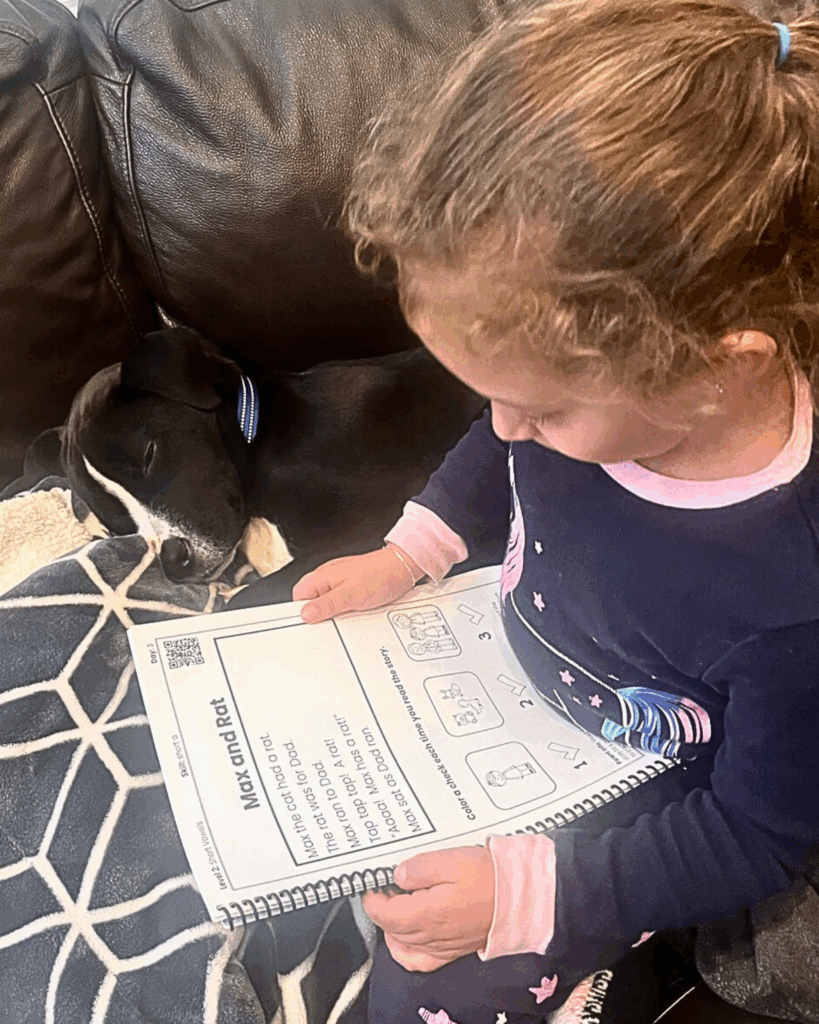
Children who’ve learned to guess instead of decode often look like readers for a while. They’ve memorized enough words to get by. But they hit a wall, usually around second or third grade, when the text becomes too complex for memory and guessing to carry them. Decoding is what gets them past that wall.
4. Strong readers have had consistent, structured practice
Reading skills take time and repetition to stick. A child might understand a concept the first time it’s taught, but that doesn’t mean it’s locked in. Skills become automatic through repeated practice: seeing the same patterns in different words, reading them in sentences, writing them, and hearing them. That cycle of exposure and application is how the brain builds a reading memory.

Strong readers have had that consistent practice built into their days. Daily practice is more effective than longer, infrequent sessions. Even 15 to 20 minutes a day, done consistently, can produce remarkable progress.
The Path Forward Looks the Same for Every Child
It doesn’t matter if your child is just beginning to learn their letters or has been struggling with reading for a couple of years. The path forward is the same: structured, step-by-step instruction that builds skills in the right order, combined with consistent daily practice.
Earlier support is always helpful. But it is never too late to begin. Children who receive the right instruction, even after a period of struggle, make real, measurable progress.
Not sure what skills your child needs next? That’s exactly what Sure Start Reading is here to help with.
When you sign up for the free trial of Sure Start Reading, you’ll begin by taking a quick, parent-friendly quiz that identifies which reading skills your child has already mastered and which ones may need more support.
Start your free trial of Sure Start Reading today.

From there, you’ll get:
- A clear, personalized starting point based on your child’s current skill level
- Lesson plans and activities your child can begin right away
- A simple, step-by-step routine that fits into just 15 minutes a day
- A sense of relief that you finally know what to focus on and what you can skip
How Sure Start Reading Builds These Skills
Sure Start Reading was designed to give your child exactly what strong readers have: clear, structured instruction in the right skills, in the right order, delivered in short, engaging daily video lessons your child can follow right at home.
Your role isn’t to plan lessons or master phonics yourself. Your role is to be present, to cheer your child on, celebrate the small wins, and let us handle the teaching.

The program is built on the Science of Reading, which means the skills are sequenced carefully. Nothing is skipped. Nothing is rushed. Each lesson builds on the one before it.
Lessons are 15 to 20 minutes long and designed to fit into real family life.
When you have questions or need support along the way, a team of qualified teachers is always available to help.
Remember, children who read with confidence didn’t get there by luck. They got there because someone made sure they had what they needed. You can be that person for your child, not by becoming their teacher, but by giving them the right support at the right time.

You don’t have to figure this out alone. We’re here, every step of the way.