
Research tells us that learning to read is not something the brain is wired to do automatically. Children must be explicitly taught how to read, and this instruction must be delivered in a specific order.
That’s why knowing what skills to teach and when to teach them matters so much. When we teach reading in a way that follows the natural progression of how children learn, we set them up for success.
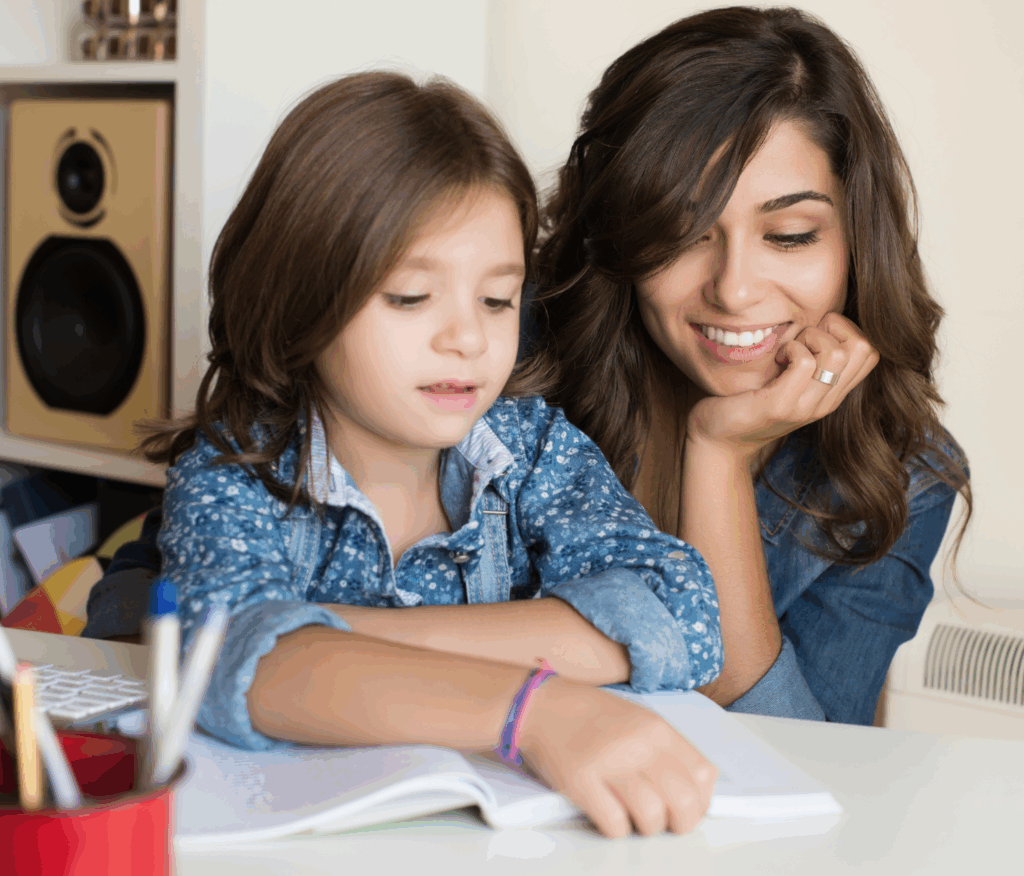
In this post, we’ll walk you through the step-by-step path most children follow when learning to read. This path starts with letter names and sounds, and eventually builds toward fluency and comprehension. You’ll discover what to look for at each stage, and how to know exactly where your child is in the process.
Every Reader Starts Somewhere. Where’s Your Child?
Before we walk through the step-by-step path for how children learn to read, here’s something simple (and helpful) you can do right now:
Take the Sure Start Reading Quiz to find out exactly where your child falls in the sequence of reading skills. In just 2 minutes, you’ll get a clear, parent-friendly snapshot of what they’ve mastered and what they need next.
You’ll walk away with a personalized plan you can use at home. This plan is backed by research and rooted in the same structured sequence we follow inside Sure Start Reading.

👉 Take the Sure Start Reading Placement Quiz
How Children Learn to Read: Typical Stages of Reading Development
1. Print Awareness + Phonological Awareness
Before a child can read a word, they must build two key foundations: print awareness and phonological awareness.
Print awareness means understanding that:
- Print has meaning
- We read from left to right and top to bottom
- Words are made up of letters, and sentences are made up of words
- Books have parts such as the title, author, and page numbers

At the same time, we build phonological awareness. This is the ability to hear and play with the sounds in spoken language. It includes:
- Clapping syllables in words (e.g., “ba-na-na” = 3)
- Recognizing rhyming words
- Identifying beginning or ending sounds (e.g., bat starts with /b/)
- Breaking spoken words apart into individual sounds (phonemes)
These early listening and awareness skills are powerful predictors of future reading success. They are built before children are reading.
2. Letter Names and Sounds
Once children understand that letters represent sounds, it’s time to teach:
- The names of uppercase and lowercase letters
- The most common sound each letter makes (e.g., S says /s/)
- How to match letters with sounds
This is where phonics begins. Children need this automatic recall to begin sounding out basic words with confidence and accuracy.
3. Blending and Segmenting Sounds
This is the heart of early decoding. Once kids know letter sounds, they need to learn how to blend those sounds together to read words, as well as segment them apart to spell.

In this stage, children focus on:
- Sounding out short, simple words (e.g., /m/ /a/ /t/ = mat)
- Pulling apart spoken words into sounds (e.g., cat = /c/ /a/ /t/)
- Swapping, adding, or deleting sounds to make new words (e.g., hat becomes hot by changing the middle sound)
These are all forms of phonemic awareness, the most advanced level of phonological awareness, and they’re essential to learning to read.
4. Reading Simple Words with Short Vowels
This is where it all starts to come together. Kids begin reading real words with decodable patterns using the phonics knowledge they have been taught.
At this stage, children focus on reading:
- CVC (consonant-vowel-consonant) words like pig, hat, and mop
- Consonant blends and digraphs (e.g., stop, ship)
- Short decodable texts that let kids apply what they’ve learned
This is often when parents start to see the lightbulb moments. Kids realize, “I can read this!” It is an exciting time!
5. High-Frequency and Tricky Words
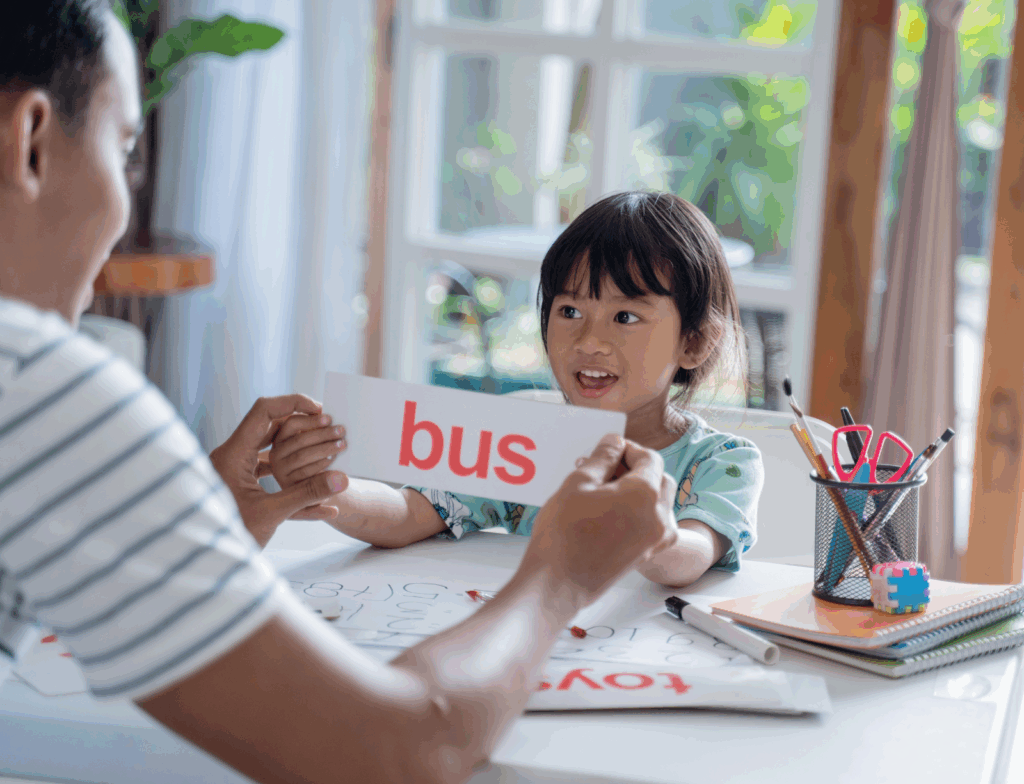
Once decoding is underway, children begin to learn high-frequency words. These are words that appear often in print. Some of these words follow the phonics rules that they have been taught, but others may not. Those that do not follow the patterns are referred to as irregular or “tricky” words.
Some examples:
- Regular high-frequency words: and, it, in
- Tricky words: said, was, the
We don’t ask kids to memorize these by sight. Instead, we use orthographic mapping. This is a research-backed approach that helps kids connect the sounds they hear with the letters they see. This way, even “tricky” words get stored in memory more effectively.
6. More Advanced Phonics Patterns

Once basic decoding is solid, children move into more complex phonics patterns, like:
- Silent e (e.g., cake, bike)
- R-controlled vowels (e.g., car, bird)
- Vowel teams (e.g., rain, boat)
- Two-syllable words (e.g., napkin, sunset)
Each new layer is taught in a specific order and requires plenty of practice and review.
7. Building Fluency and Expression
Fluency is about reading smoothly, accurately, and with expression. It’s not just speed. It’s about confidence and ease.
Readers build fluency through:
- Rereading familiar decodable texts
- Echo reading (“You read a sentence, I read a sentence”)
- Paired reading with an adult or older sibling (reading the text at the same time
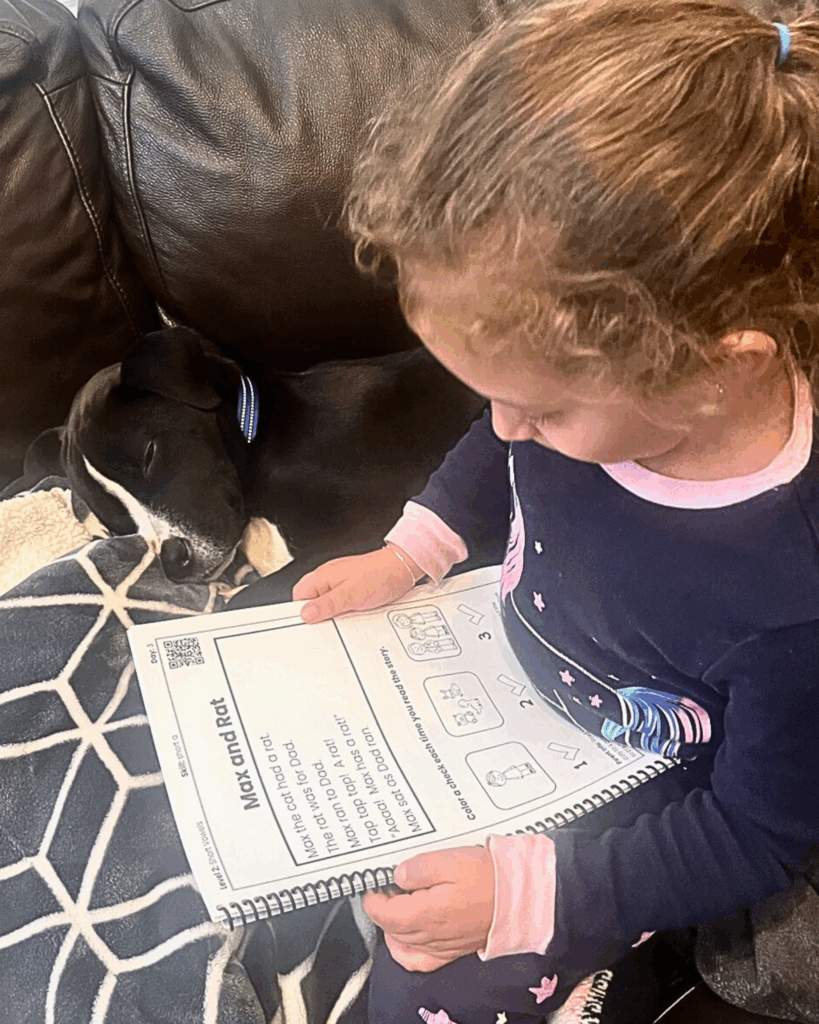
As decoding becomes more automatic, kids can focus more on phrasing, punctuation, and understanding the meaning behind the words.
8. Strengthening Comprehension
Comprehension is the ultimate goal of reading. It grows as decoding and fluency improve.
Children strengthen their comprehension when we have them:
- Retell what they’ve read
- Visualize what’s happening in the story
- Make predictions and ask questions as they read
Comprehension doesn’t develop in isolation. It builds on accurate, fluent decoding and the strong foundation they’ve been building from the start.
Learning to read doesn’t happen all at once. It’s a series of small, important steps. When those steps are taught in the right order, with the right kind of support, children build the skills they need to become confident, capable readers. At Sure Start Reading, we follow a research-backed, systematic approach to reading instruction that ensures no gaps are left behind.
Want to know exactly where your child is in the sequence and what to do next?
Take our free Sure Start Reading Quiz to get a clear picture of your child’s reading needs and a step-by-step plan to support them at home.
