
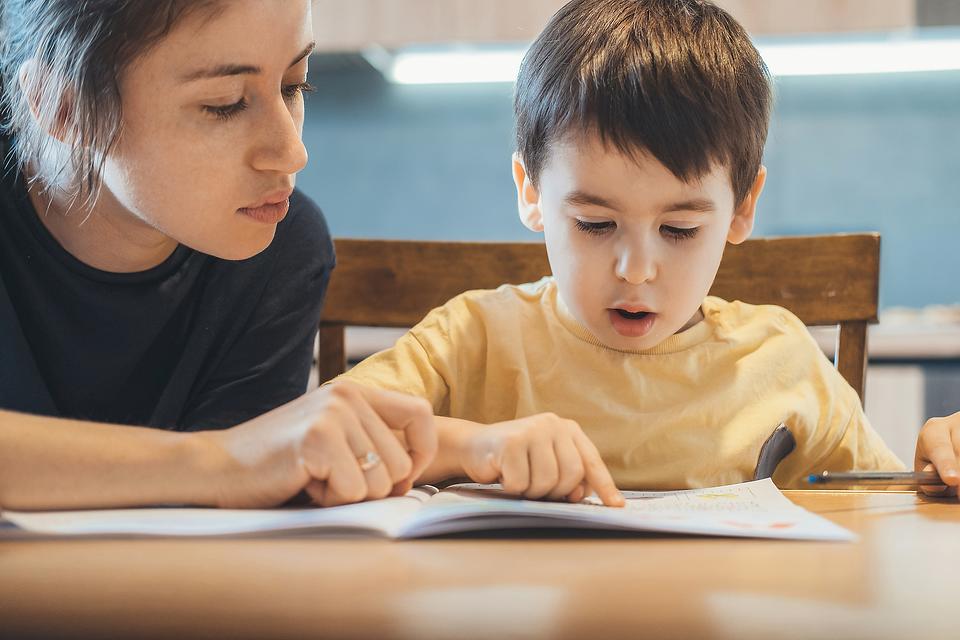
If you’re here, chances are you’ve been thinking about your child’s reading progress. Perhaps reading time leads to frustration in your household, or a teacher has suggested that your child could benefit from a little extra support at home.
You’re here because you want to help, and you don’t want to waste time guessing what to do next.
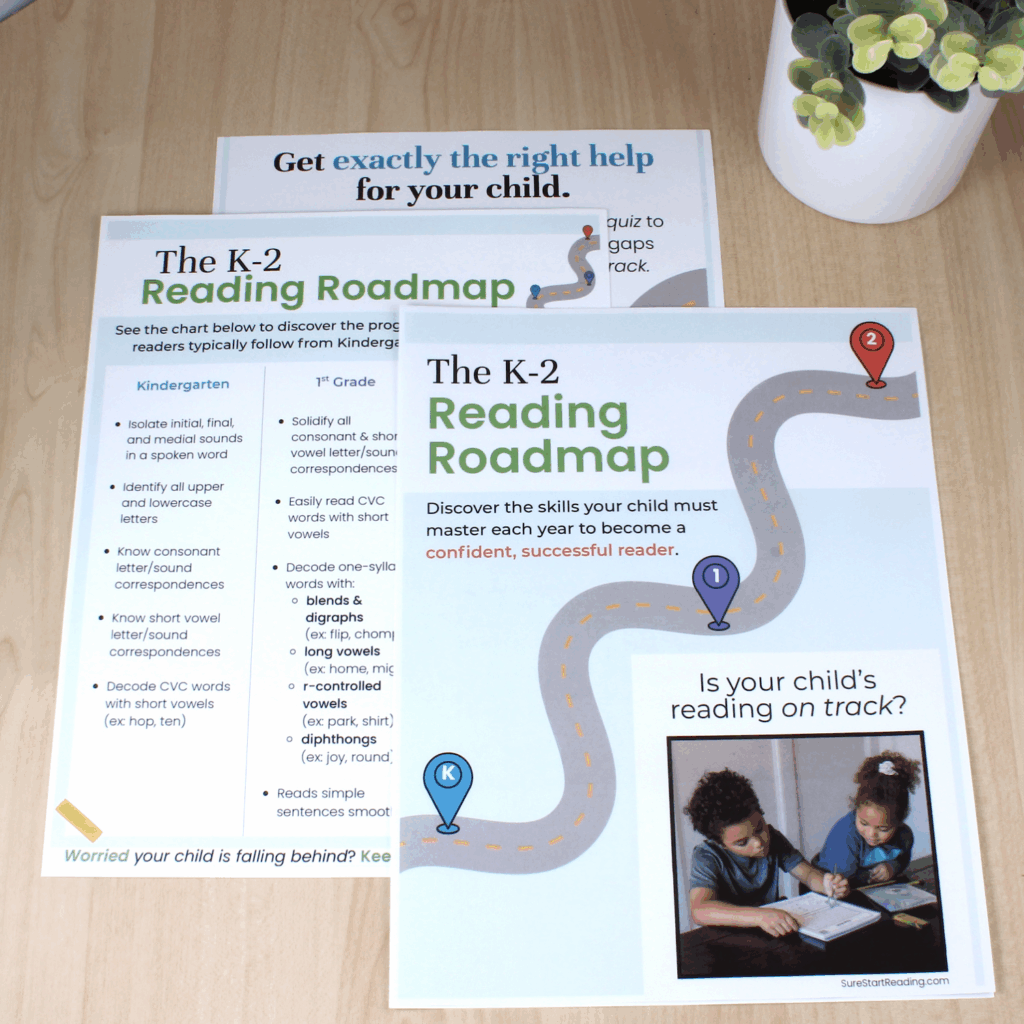
Start Here: Download the Reading Skills Roadmap
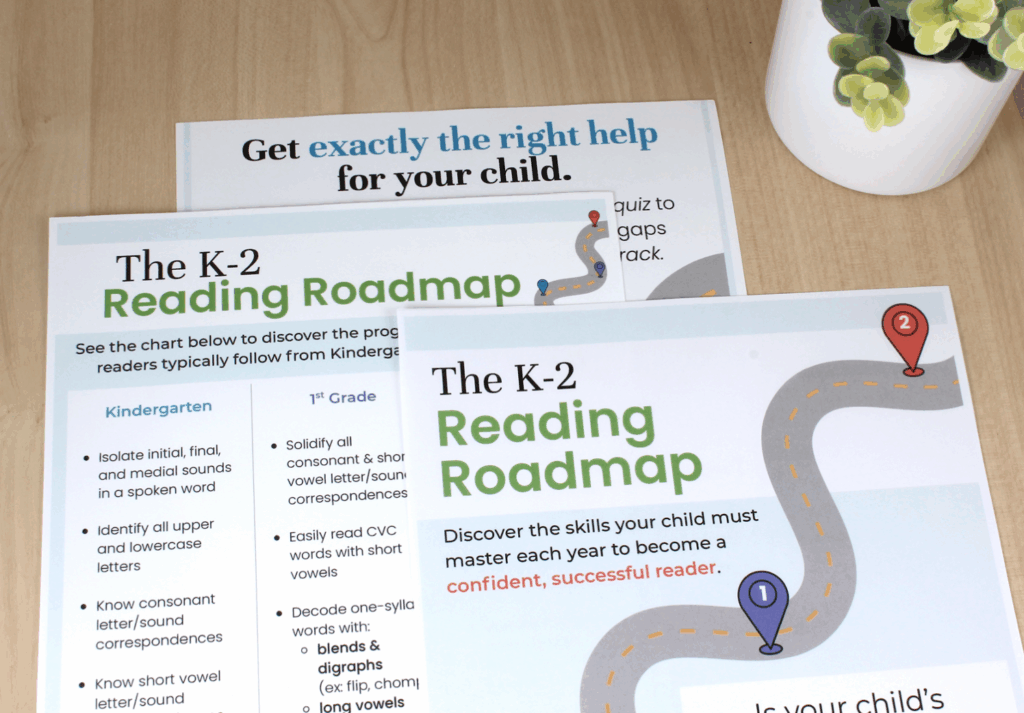
To help you get started, we’ve created a free, parent-friendly Reading Skills Roadmap.
This simple visual shows you the step-by-step path that “on track” readers typically follow from Kindergarten to 2nd grade. Once you understand where your child is on the path, the roadmap will help you see exactly what to work on next.
No more guessing or overwhelm. Just a clear direction forward.
Drop your email below to instantly receive
🌟 The Reading Skills Roadmap 🌟
Why Learning to Read Doesn’t Always Come Easily
Reading doesn’t just “click” for every child. In fact, reading is not a natural process. It must be taught explicitly and in a specific order. The National Reading Panel emphasizes that reading success depends on mastering specific foundational skills in a clear, logical sequence.
When that sequence is rushed, skipped, or taught inconsistently, many children struggle to connect the dots. When one skill is shaky or missing, it can create a ripple effect that makes reading feel frustrating and difficult.

The good news? With the right instruction and support, nearly every child can learn to read confidently. It’s not about working harder, it’s about following the right path.
Why a Skill-Based Approach Works Best
When a child struggles with reading, the first instinct is often to “just read more.” But if the foundational skills aren’t in place, more reading won’t build confidence.
At Sure Start Reading, we follow the Science of Reading and use a skill-based, systematic approach that teaches reading in the right order. Here’s a quick look at what that includes:
Phonological Awareness
Before reading words, kids need to hear and work with sounds in spoken language. This includes:
- Clapping syllables (e.g., ba-na-na = 3)
- Recognizing rhyming words
- Identifying first and last sounds in words
- Breaking words into individual sounds (e.g., /c/ /a/ /t/)
Letter-Sound Knowledge
Kids learn the most common sound each letter makes, and how to match sounds to letters (e.g., S says /s/, M says /m/).
Blending and Decoding
Once kids know their sounds, they learn to read words by blending them together:
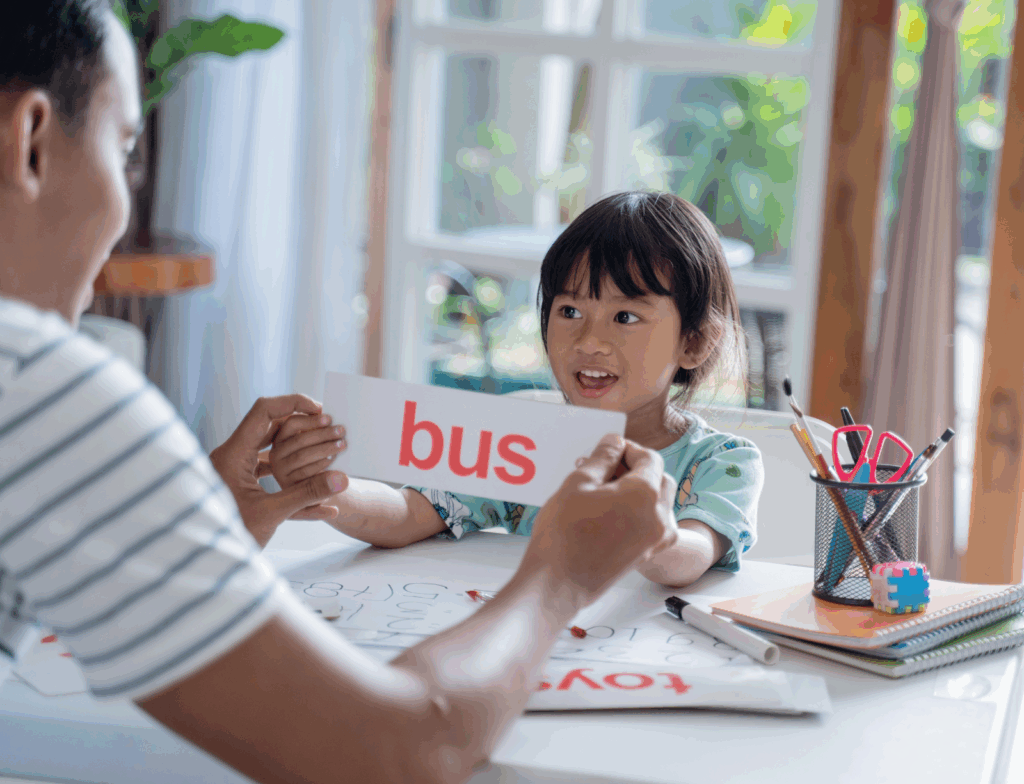
- CVC words like cat, pig, mop
- Consonant blends (stop, flip) and digraphs (ship, chop)
Fluency and Automaticity
Reading becomes smoother and more automatic. Children start to read with expression and confidence, instead of slowly sounding out every word.
Comprehension Strategies
As decoding becomes more automatic, kids can focus on understanding what they read by:
- Retelling stories
- Making predictions
- Visualizing the story
- Asking and answering questions
Get a Clear Path Forward
You don’t have to figure this out on your own.
With the Reading Skills Roadmap, you’ll be able to:
✔️ See where your child is right now
✔️ Understand which reading skills come next
✔️ Spot any gaps that might be holding them back
Take the first step toward helping your child become a confident, capable reader. Add your email below to instantly receive The Reading Skills Roadmap. ⤵️